Dienstag, 6. Oktober 2026

Retro platformer series Dizzy is back for a new game from its original creators, who are really happy for you to know it's made with AI

For British people who were actively playing games in the late 80s and/or retro enthusiasts looking back at that period of the industry, the name Dizzy might ring a bell (it doesn’t for me, but what can I tell you, I’m 24). A prolific platformer series starring a bipedal egg, it spanned formats from the ZX Spectrum to the NES and Game Gear, and managed sixteen(!?) releases between 1987 and 1992 - before slowing significantly past the millenium. Still, that hasn’t stopped its creators, the Oliver Twins, from trying to bring it back in the current era, and so came the announcement of another new Dizzy game during their talk at last weekend’s Play Expo in Blackpool.

Read more


from Rock, Paper, Shotgun https://ift.tt/bToaAO7
via ifttt

After 12 years, Ultra Street Fighter IV gets not one, but two connection-stabilising rollback netcode mods aaaand they're both made using Claude

Street Fighter IV, the game that basically revived the fighting game genre back in 2009 and gave birth (not literally) to a new subset of players lovingly referred to as ‘09ers’, saw its final iteration in 2014’s Ultra Street Fighter IV. While it wasn’t the most perfectly balanced game, it’s remembered fondly by its players and is viewed by many as the last vestige of ‘honest Street Fighter’. It’s also burdened with being limited to delay-based netcode rather than the more modern and more stable rollback netcode, but this is something modders are attempting to fix. Using genAI. Sorry if I got your hopes up.

To quickly explain why the different netcode matters, delay-based netcode handles latency issues by variably delaying inputs to match unstable connection, while rollback netcode removes this delay by accepting inputs immediately and then reversing the game state (rolling back) if the connection instability causes inconsistency between players. All of this to say, rollback has become the industry standard for its stability since the mid 2010s, leaving delay-based to rot in input-eating hell.

Read more


from Rock, Paper, Shotgun https://ift.tt/aHMSmt2
via ifttt

Montag, 5. Oktober 2026

"Coders will never forgive me for this level": Warhammer 40,000: Boltgun 2 has a rotatable "fleshmetal" puzzle map that drove its own development team crazy

In the grim darkness of the far future, there is something far worse than war. There is: a level that is basically a huge, spinning lock full of tentacles, with your Space Marine or Sister of Battle protagonist naturally serving as the key.

Auroch Digital's new FPS Warhammer 40,000: Boltgun 2 launches next week, and I've been chatting to the game's principal designer Matt Bone about some of the more "creative" environments in store. It's a sturdy rule of thumb that all the best ideas in gamedev are the ones that make your colleagues want to fill your trousers with sea urchins. Bone certainly appears to have achieved this with the map comfortingly known as Vicious Circles.

Read more


from Rock, Paper, Shotgun https://ift.tt/iEPUIWj
via ifttt

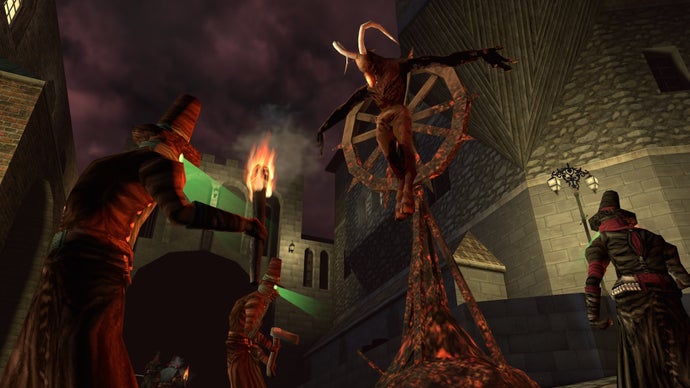
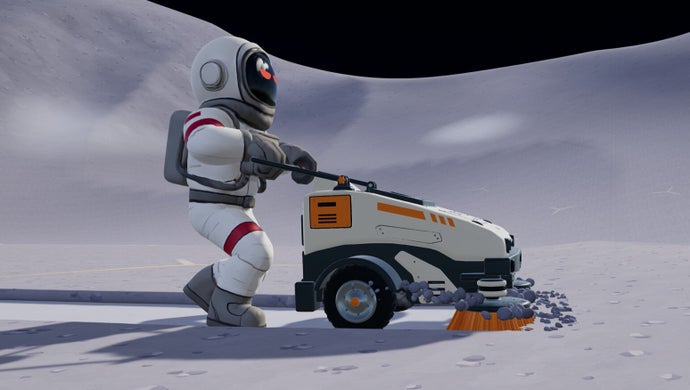
This week in PC games: Star Wars: Galactic Racer, Hellraiser: Revival, and a throwback tycoon game about turning utopias into carparks

Happy this week, all! I regret to inform you that the videogame developers have been at it again. Sometimes, I find that the promising new releases distribute themselves evenly throughout the week, like butter perfectly spread over just the right amount of toast. And sometimes, as with this week's haul, they congregate weirdly on Thursday and Friday. It's as though they were trying to get away from me, like rats ambushed in the pantry, pawing frantically against the weekend's closed and bolted door. Haha! Hahahaaha! There is no escape, cheese-filching squeakmonsters! Down you go! Down you go into the Maw!

If you think characterising new videogames as a rodent infestation is unkind, I quite agree. Rats are sociable, adaptable, and admirable creatures who deserve better than to be compared to stupid videogames. In any case, I am only being macabre because this is the month of Halloween – hence the conspicuous abundance of horror in the list below.

Read more


from Rock, Paper, Shotgun https://ift.tt/gZAIWGK
via ifttt

"We opted out of some things really early on": How the small team making No Law plan to make it look as big as Cyberpunk 2077

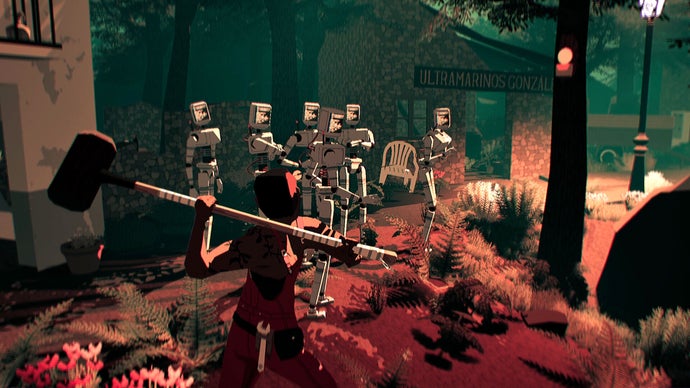
If you've watched the trailers for No Law or the tech demo that developer Neon Giant showed off at Unreal Fest earlier this year, it would be easy to believe the game has a similar scope to CD Projekt Red's Cyberpunk 2077. After all, both games are open-world RPGs set in cyberpunk cities. Set in a beautifully realised mediterranean city that is somehow equal parts Lisbon and Kowloon Walled City – and with corner shops that are as stuffed with riches as the one down the road from my flat. But, the developers will happily tell you where they've scrimped and saved.

Read more


from Rock, Paper, Shotgun https://ift.tt/Kb4N2Vn
via ifttt

Sonntag, 4. Oktober 2026

The Sunday Papers

Sundays are for having the first lie-in in a month. No trips to visit family, no waking in unfamiliar beds, and, best of all, no having to wait until the hosts are up before you can get started on breakfast. I will be snoozing deeply in my own particular mattress before having a plate of toast and scrambled eggs at a time that I deem appropriate.

Once that's all polished away, I will return to bed with a fresh cup of coffee and peruse the week's best writing at my own leisure.

What's that? You want me to share? Fine. You can have a read of them when I'm done.

Read more


from Rock, Paper, Shotgun https://ift.tt/J2gKRVC
via ifttt

Samstag, 3. Oktober 2026

The Other One: Jordan Magnuson's Game Poem jam is a fascinating collection of chimeras

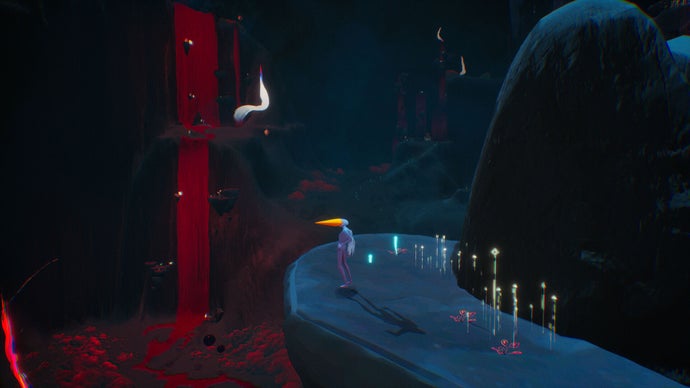
Sometimes I Wonder About The Other Me is a 2D platformer created by "small game" developer Luis "Ludipe" Díaz Peralta, whose other works include A Place For The Unwilling. It's broken into a handful of single screen maps. On each screen, there's a Mario-brand exclamation mark block that burps a text fragment, forming an overarching monologue that begins with the title phrase. As you move between screens, you come to a signpost pointing left and right. Heading in either direction leads to a splitscreen area, with the player controlling duplicate characters. As you guide your charges rightward, one half of the screen flakes away to darkness. The remaining character returns to the starting screen, there to wonder anew about the Other Me.

Read more


from Rock, Paper, Shotgun https://ift.tt/fESZOyA
via ifttt